For Teachers & School Leaders
Why some children struggle to hear the sounds in words, even with excellent phonics teaching.
Even the best phonics teaching can't reach every child, because sometimes the challenge isn't phonics at all, it's rhythm.
Even with strong phonics teaching, some pupils still find it hard to hear the sounds in words clearly. This free guide reveals the hidden reason why, and how small changes in rhythm and timing can make a big difference.
When children can't quite hear the difference between sounds, it's often because their brains are processing rhythm differently.
Some pupils seem to have a 'fuzzy' perception of phonemes - even when phonics teaching is strong.
There's a reason for this - rhythm and timing shape how the brain processes language.
Phonemic awareness underpins fluency and comprehension - and access to the wider curriculum.
Learn the five signs -that phonemic awareness may be fragile or inconsistent.
Discover simple practical ways - spot and support timing-based barriers early.
GET YOUR FREE GUIDE 'Fuzzy Phonemes in Early Reading'
‘It kind of helps me to sound stuff out. I used to not be able to sound out simple words properly.
’ (30 month gain in reading comprehension).
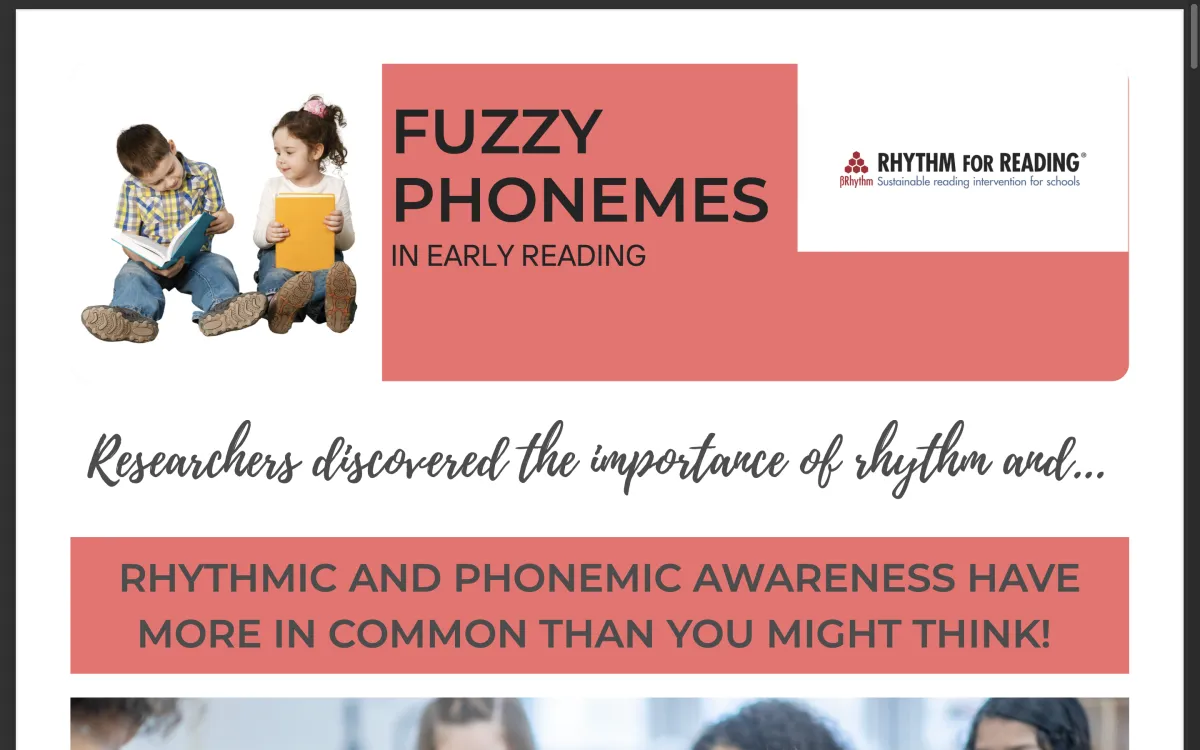
This guide explores the fascinating link between rhythmic awareness and phonemic awareness, and what it means for early reading. You'll find out what the neuroscience tells us, and how to bring these discoveries into your classroom to strengthen phonics, boost inclusion, and build confident readers.
Want to go further? Sign up for the guide and get a free spot at Joyful July Live!
When you download the guide, you'll also get a free spot at Joyful July Live! - a special session where we'll explore rhythm, timing and early reading success in more depth.
© All Rights Reserved, 2026 Rhythm for Reading Services Limited Privacy Policy